
Electric Fireplace Repair
Heater, blower, remote, or flame-effect acting up? One tech sorts it out.
Learn moreTrading wood hauling and ash cleanup for a wall switch is one of the best upgrades you can make to a fireplace — done right, which is an engineered project, not just "add a burner." We size or reline the flue for gas, lock the damper open to code, run a BTU-correct gas line with a sediment trap, pressure-test before flame, and verify with a CO check. One crew handles the flue work, the gas line, and the appliance together, so you get real-fire ambiance, none of the ash, out of a single coordinated job.
Converting a fireplace from one fuel to another is the single highest-leverage upgrade most homeowners can make to a hearth — and the one most often done badly. The appliance change is straightforward; the code obligations, venting changes, and safety locks around it are where a conversion either becomes a clean, lasting system or a hazard hiding behind a pretty flame. Texas Service Experts handles wood-to-gas conversions as engineered projects — and because one crew owns the appliance, the flue, the gas line, and the chimney it all vents into, the conversion is coordinated end to end whether the goal is convenience, efficiency, or simply ending the firewood chore.
The most common request is wood-to-gas, and it's the one with the most code nuance. Dropping a vented gas log set or a sealed gas insert into a masonry firebox isn't just "add a burner." We size and, where needed, downsize the flue with a correctly-rated aluminum or stainless gas liner so an oversized masonry flue doesn't condense and back-draft. We install a code-required damper clamp — or remove the plate entirely — to permanently lock the flue open for a vented log set, because a closed damper over a live gas flame is exactly the failure that fills a room with combustion products. We run the gas drop sized to BTU load, add the sediment trap and shutoff, and pressure-test before flame. The result is a real fire's ambiance with a wall switch and none of the ash.
For homeowners chasing maximum efficiency over open-fire ambiance, we convert to a sealed direct-vent gas insert with a positive liner connection from the appliance collar to the cap — turning a heat-losing open fireplace into a genuine zone heater. And for anyone wanting zero maintenance and no gas at all, a wood-to-electric path using a plug-in insert is the cleanest option: no flue, no fuel, framed and trimmed to look intentional. We match the conversion to how you'll actually use the room rather than push the biggest ticket — vented gas logs for the closest thing to an open fire, a sealed insert for heat and efficiency.
Every conversion is also a venting decision, and we treat it as one. Changing fuel changes flue-gas temperature, volume, and acidity — a flue sized for a roaring wood fire is wrong for a gas appliance, and one sized for atmospheric gas is wrong for a sealed insert. We assess the existing chimney, reline where the new appliance demands it, and terminate correctly. Skipping this step is the most common reason a "working" conversion soots, corrodes its liner, or spills — and it's the step one accountable whole-home crew never skips to shave a quote, because we're the ones who'll be back if it fails.
Safety verification closes every conversion. We confirm the damper is locked open or removed for vented gas, leak-test the gas train, run an ambient CO check during operation, and on vent-free conversions verify the ODS pilot. If we find the chimney or firebox can't safely host the new fuel without structural work, we tell you before we convert — not after. A conversion done right changes how you live with the room: a switch instead of a chore, clean heat instead of a cold draft. Done wrong, it's a latent hazard with a nice flame, which is why we do the engineering, document the code locks and the readings, and stand behind the system.
With our crew, a wood-to-gas fireplace conversion is never guesswork. We scope every job from a graded, photographed inspection first — the NFPA 211 level the evidence calls for — so the work is matched to what your flue and masonry actually need, with the report to prove it. The documented inspection is the record the wood-to-gas fireplace conversion is built on.
Chimney inspectionA wood-to-gas fireplace conversion isn't a matter of opinion — it's held to published national standards. Texas Service builds every job to the named codes below and documents it, so the work is provably right for an inspector, an insurer, or a future buyer. These are the universal standards; your city's permit and inspection requirements are confirmed with the local authority before we pull the job.
Converting to vented gas logs means the damper gets permanently clamped open, or its plate comes out, so a closed damper can never trap combustion products above a live gas flame.
Switch the fuel and you switch the flue-gas temperature, volume, and acidity along with it, so we reline or downsize the masonry flue with a correctly-rated gas liner per NFPA 211 to keep it from condensing, corroding, or back-drafting.
Sized to the appliance BTU load and fitted with the NFPA 54 sediment trap and shutoff, the gas drop is pressure-tested by manometer before we ever light a flame.
Every sealed direct-vent insert gets a positive liner connection run from the appliance collar clear to the cap, never a dump into an open flue that condenses and back-drafts.
During commissioning the unit runs while an ambient CO check is taken, and for a vent-free conversion the oxygen-depletion-sensor (ODS) pilot gets verified as well.
Codes cited are the established national standards (NFPA, UL, IRC) that govern this service. The adopted code edition, permit, and inspection requirements vary by city —Texas Service verifies them with your local authority having jurisdiction on every job.
We look at the firebox, measure the flue, and check where the gas comes in, then choose the right path from there.
We size, reline, or downsize the flue as needed and lock the damper open to meet code.
We run a gas drop sized to the BTU load, fit a sediment trap, and set the appliance in place.
Before we hand it back, we pressure-test, leak-test, and run an ambient CO check.
We've worked on 1,000+ DFW homes over 10+ years. Every job — small sweep or full rebuild — runs the same way: certified technicians, written quotes, photo reports, warranty in writing.
An engineered conversion that locks in the flue, gas line, and code, not just a dropped-in burner
A flue sized or relined for gas so it won't condense or back-draft on you
Code damper clamp locked open for vented log sets
A BTU-correct gas train, pressure-tested, with a CO check when we commission it
Family-owned, CSIA-certified, NFPA 211–compliant. We're the team you call when you want it done right the first time — no rotating subcontractors, no upsell pressure, no surprises. Same techs, same trucks, same standard.
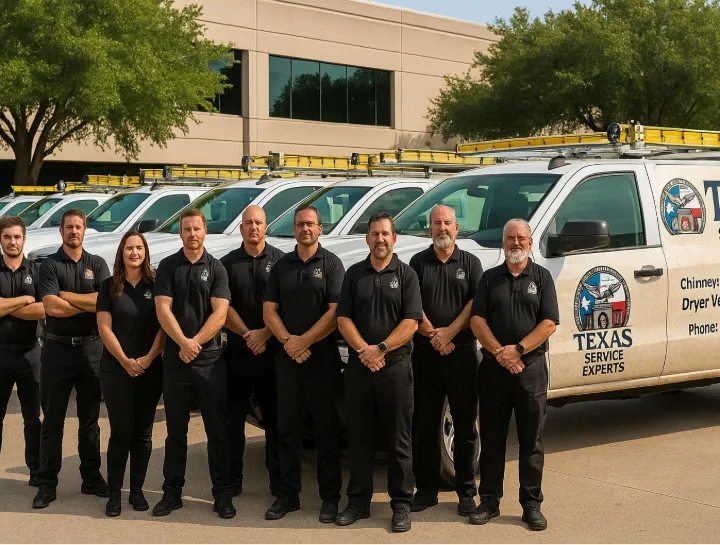
The NFPA recommends a Level 1 inspection every year, with a sweep once buildup reaches 1/8" of creosote — for a wood fireplace you actually use, that's about once a heating season. The neighborly part: since we're already on the roof, the same crew checks your dryer vent and caps the visit with a quick whole-home safety look, so one appointment covers what would otherwise be three.
Yes — our inspectors hold current CSIA (Chimney Safety Institute of America) certifications, verifiable in the CSIA member directory at csia.org, and we have NFI specialists for fireplace work. The same trained crew handles your chimney, fireplace, dryer-vent and air-duct needs, so you're not juggling four different contractors for one house.
Yes — 24/7 response (subject to crew availability) for active leaks, an animal trapped in the flue, post-fire damage, and storm damage, same-day in most cases. One call reaches one crew that can handle whatever the situation turns out to need, instead of bouncing you between specialists while the water's still coming in.
Always — a written quote before we lift a tool, with photos of what we found, so you see exactly what you're approving. If the same visit turns up something in the dryer vent or ducts, it goes on one itemized quote and one invoice rather than a string of separate trips.
The Whole-Home Care Plan is our annual maintenance plan at $19.99/month ($240/year): a Level 1 inspection and sweep ($248 value), priority scheduling, 10% off all repairs, and emergency-response priority. Because one crew covers chimney, fireplace, dryer-vent and ducts, the plan keeps the whole house on a single schedule instead of a calendar full of separate service calls. Cancel anytime, no contract.
Last reviewed:
Other services in the Gas & Fireplace category.
Free written quote. Same-week scheduling. 24/7 emergency response when you need it.
Active leak, animal in flue, post-fire damage, or smoke event? Real humans on the line 7 AM to 12 AM every day — replies in under 2 minutes. Tech dispatch within 2 hours during business hours, subject to crew availability after-hours.
Emergency line